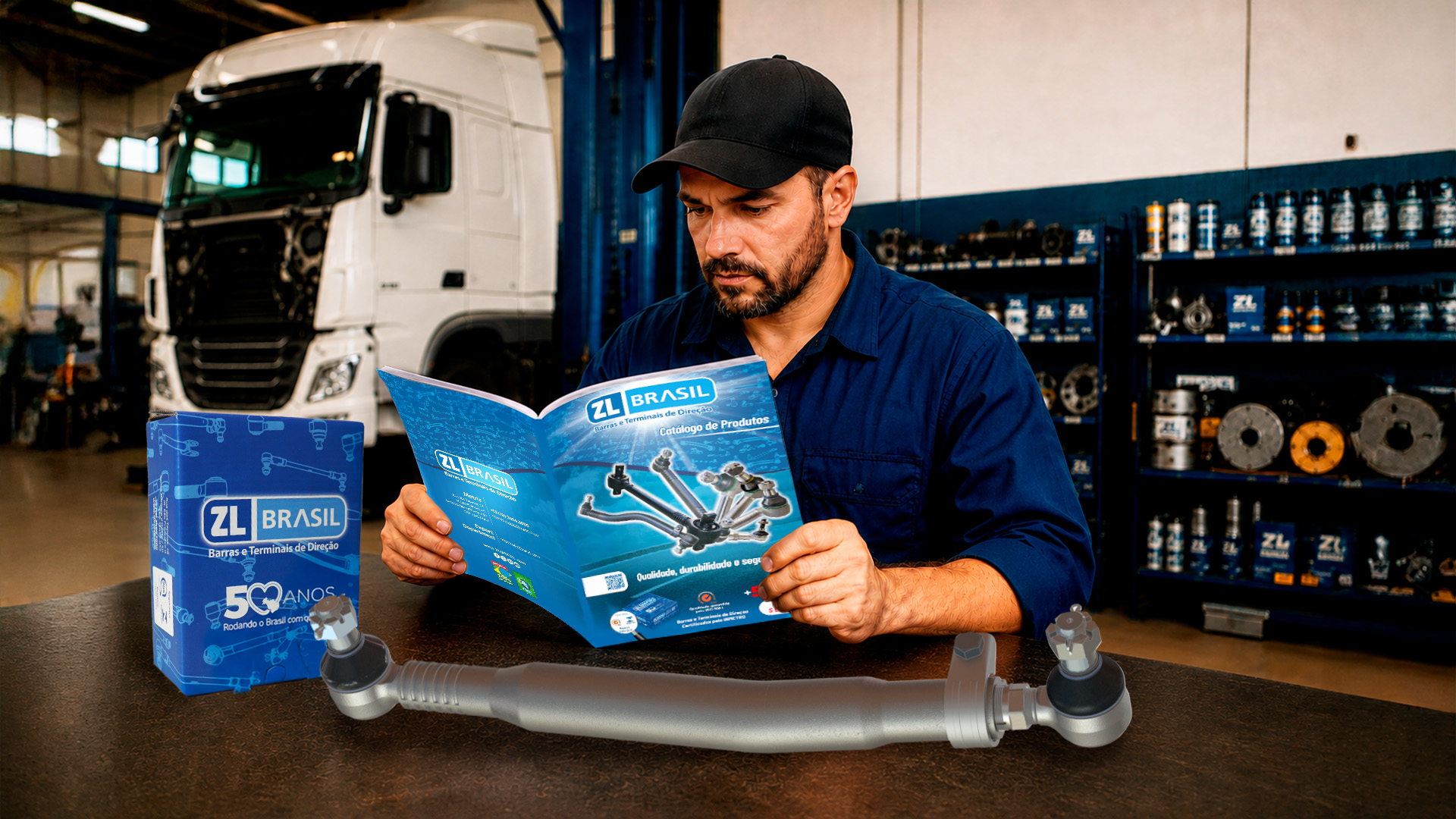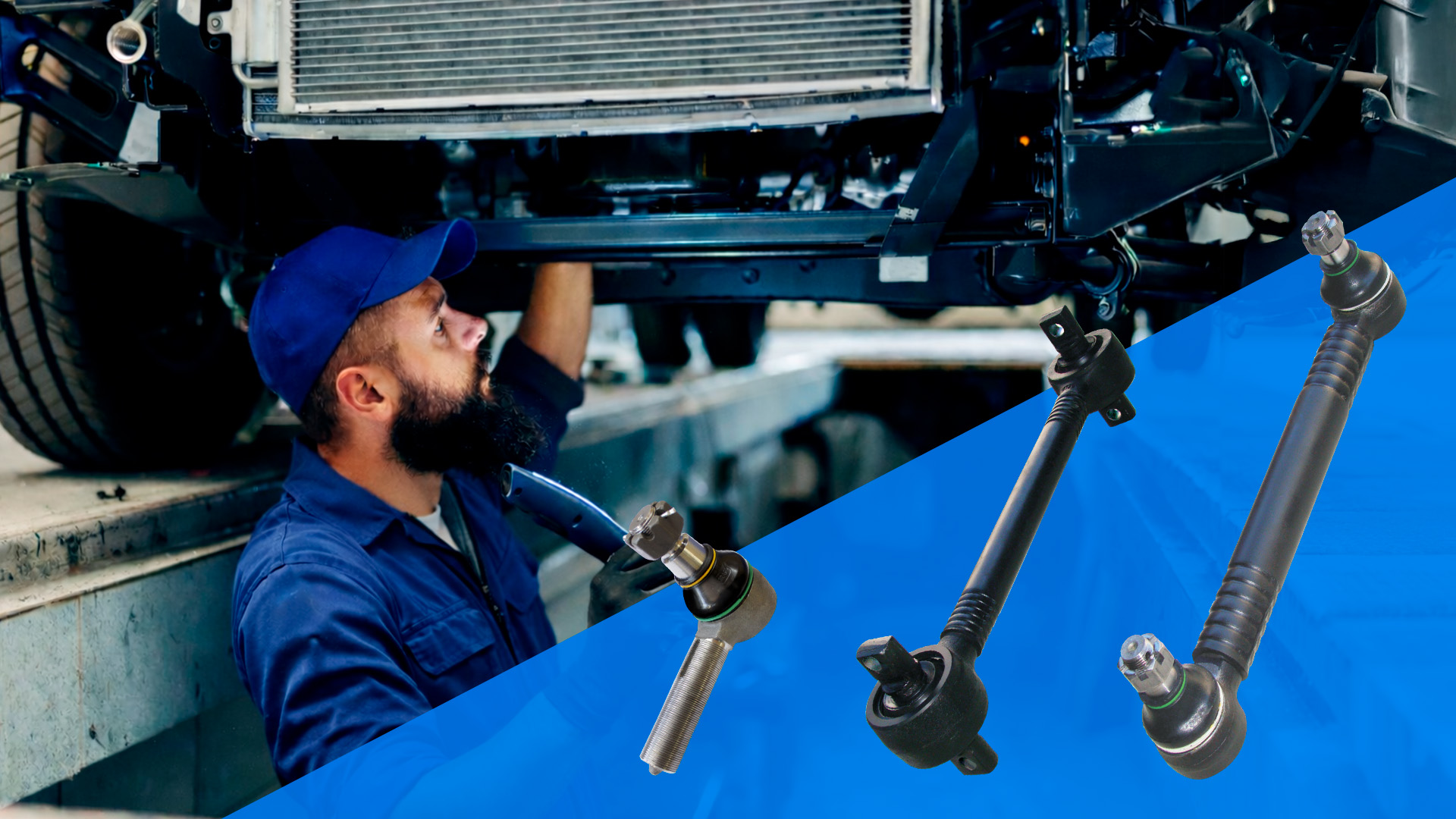
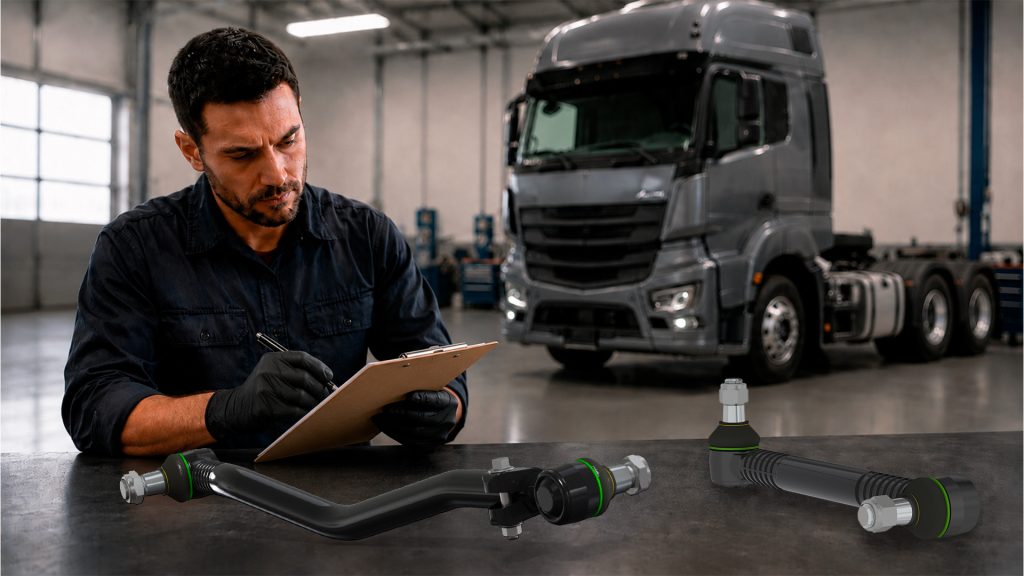
In workshop routines, the main precautions when installing steering system parts involve diagnosis, inspection, correct assembly, retightening, alignment, and functional testing, since noises, looseness, vibrations, or difficulty steering do not always originate from a single part. As this system directly affects vehicle drivability, stability, and safety, replacing a component requires considering the entire assembly to reduce risks, avoid rework, and ensure a more reliable repair.
Checking the part before assembly
Before starting the service, the workshop must confirm that the part corresponds exactly to the vehicle application. Model, year, version, installation side, reference code, and component characteristics must be carefully checked, especially in vehicles that have similar variations.
Visual inspection is also part of this checking process. The packaging must be intact, and the part must not show any apparent damage to threads, dust boots, pins, bushings, or joints. If there is any sign of impact, deformation, or damage, the ideal procedure is to stop the installation and verify the source of the problem before putting the component into use.
Evaluation of the steering and suspension assembly
The steering system works together with several vehicle components. Therefore, when replacing a part, the workshop should also observe the condition of the suspension, tires, wheels, and mounting points. A new part may have its durability compromised when installed in an assembly that already shows looseness, misalignment, or advanced wear.
This evaluation helps prevent incomplete diagnoses and unnecessary returns. A noise when maneuvering, vibration in the steering wheel, or the vehicle pulling to one side may be related to more than one cause. When the professional analyzes the assembly in an integrated way, they can better guide the customer and recommend a repair that is more consistent with the real condition of the vehicle.
Precautions during installation
Installation must be carried out with proper tools and according to the technical recommendations for each application. Forcing fittings, applying excessive impacts, or improvising equipment may damage the part before the vehicle even returns to operation. In steering system components, minor damage to threads, joints, or mounting areas can compromise the safety and service life of the repair.
It is also important to check the position of the part during assembly. Some components have a correct side, specific angle, or defined fitting method. The contact area must be clean, without excessive dirt, oxidation, or residues that could prevent proper seating. This simple precaution helps avoid looseness, noises, and interference with steering movement.
Retightening and proper torque
Retightening is a decisive step for installation safety. Insufficient tightening may cause looseness, noises, and improper movement, while excessive force can damage threads, deform parts, or compromise mounting points. Therefore, the use of a torque wrench is important to follow the vehicle’s technical specifications. It is also necessary to replace nuts, locks, and fastening elements whenever this is recommended.
Alignment after replacement
Replacing steering system parts may alter the vehicle geometry. Components such as tie rod ends, bars, and joints directly influence wheel position and, consequently, steering behavior. For this reason, alignment should be part of the process after installation.
When this step is ignored, the vehicle may present an off-center steering wheel, pulling to one side, instability, and irregular tire wear. In addition to affecting driving comfort, misalignment can increase stress on newly installed parts. Alignment must be performed with proper equipment and according to the vehicle manufacturer’s specifications.
Final test and customer guidance
After assembly and alignment, the workshop should perform a functional test to evaluate steering behavior during maneuvers, turns, and low-speed driving. This step helps identify noises, looseness, vibrations, or any sign of irregular operation before delivering the vehicle.
It is also recommended to advise the customer to watch for signs such as the vehicle pulling to one side, misaligned steering wheel, noises when steering, or irregular tire wear. For workshops seeking greater application safety and repair quality, relying on dependable parts makes a difference throughout the maintenance routine. Visit our website and learn about ZL Brasil’s solutions for the steering system, and check the correct part for each application.