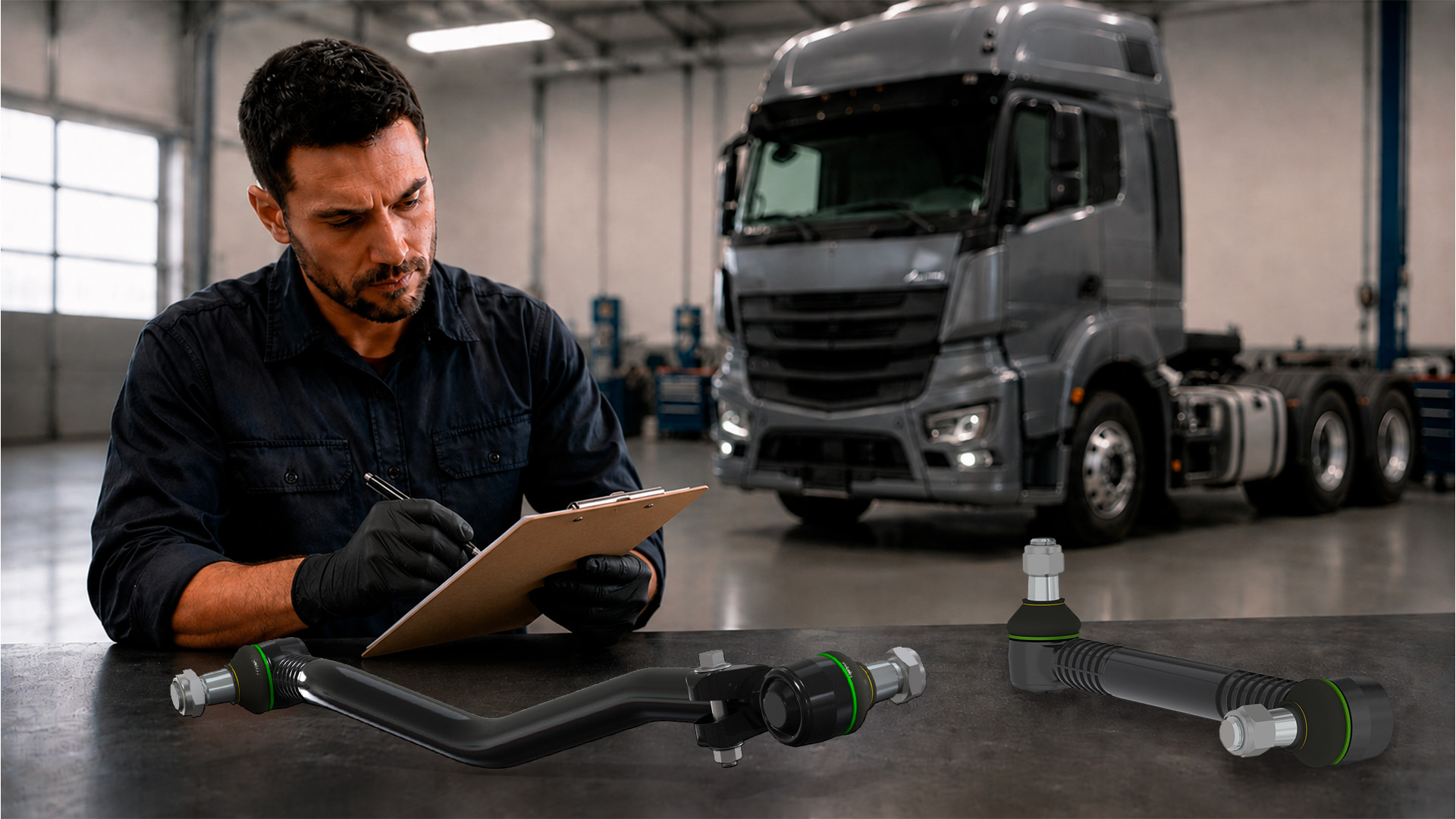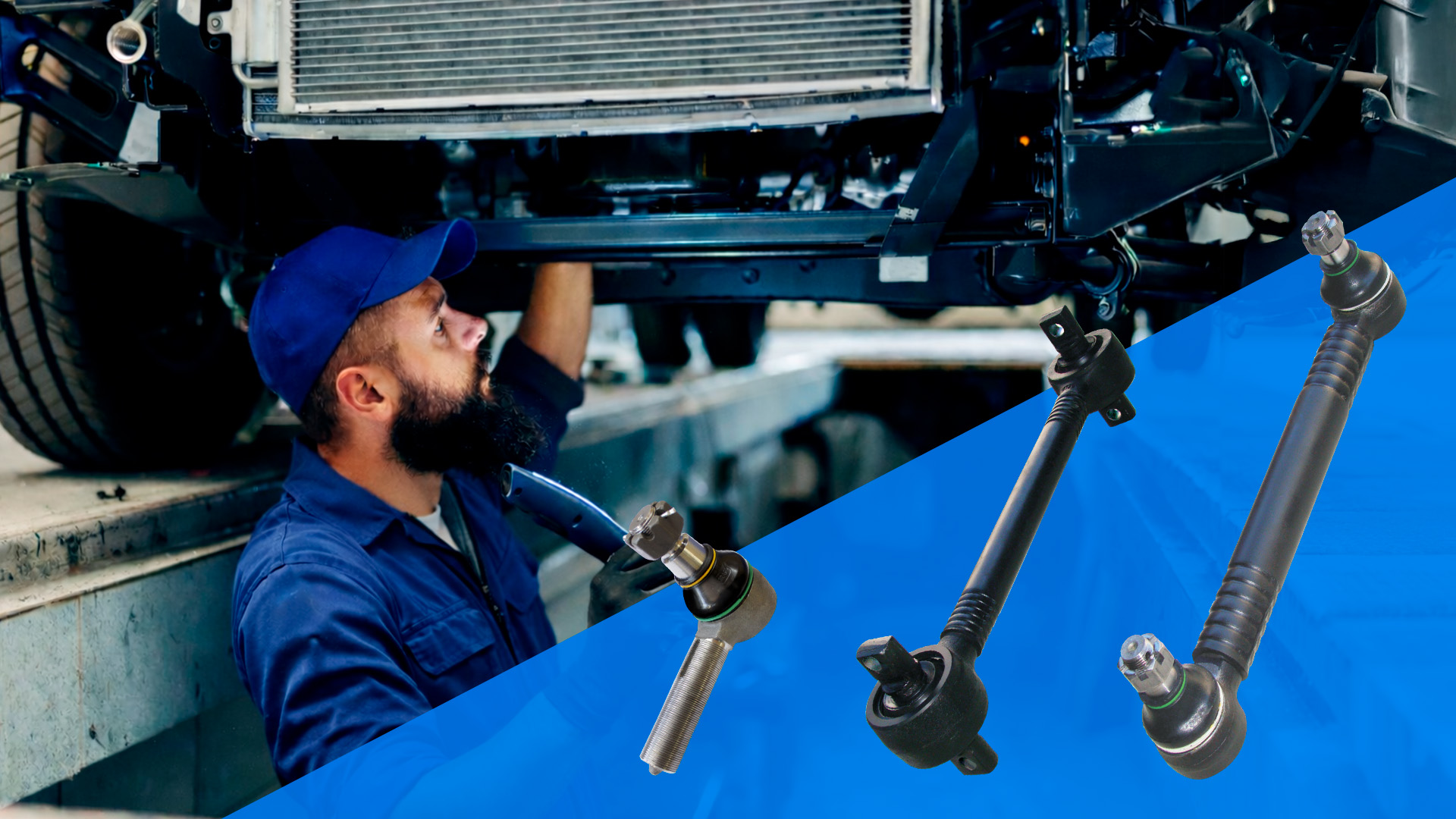
How to correctly choose steering rods and tie rod ends for replacement is a decision that requires technical attention, proper catalog consultation and verification of the vehicle information before purchase. For distributors, counter salespeople, installers and mechanics, this care is essential to reduce incorrect exchanges, avoid rework and ensure that the indicated part is compatible with the correct application.
Why is choosing the correct part so important?
Steering rods and tie rod ends are part of the system responsible for transmitting steering wheel movements to the wheels. Therefore, any mistake in choosing the part can compromise installation, cause incompatibility with the vehicle and lead to customer dissatisfaction.
In many cases, an incorrect exchange does not occur due to product failure, but because of an application error. This may happen when the part is chosen only by appearance, visual comparison or incomplete vehicle information.
To avoid this type of problem, correct identification must consider technical data, catalog consultation and verification of application codes.
Correct application starts with vehicle identification
Before recommending or purchasing steering rods and tie rod ends for replacement, it is important to gather the main vehicle information. This data helps avoid doubts during consultation and makes the choice safer.
Among the information that should be checked are:
• Vehicle brand;
• Model;
• Year of manufacture;
• Version;
• Engine type;
• Application side, when there is a difference between right and left;
• Part code, when available;
• Specific characteristics of the steering system.
This verification is even more important in vehicles that have had different assembly versions over the years. In some cases, two vehicles that look the same may use different components, depending on the version, engine type or year/model.
The importance of catalog consultation
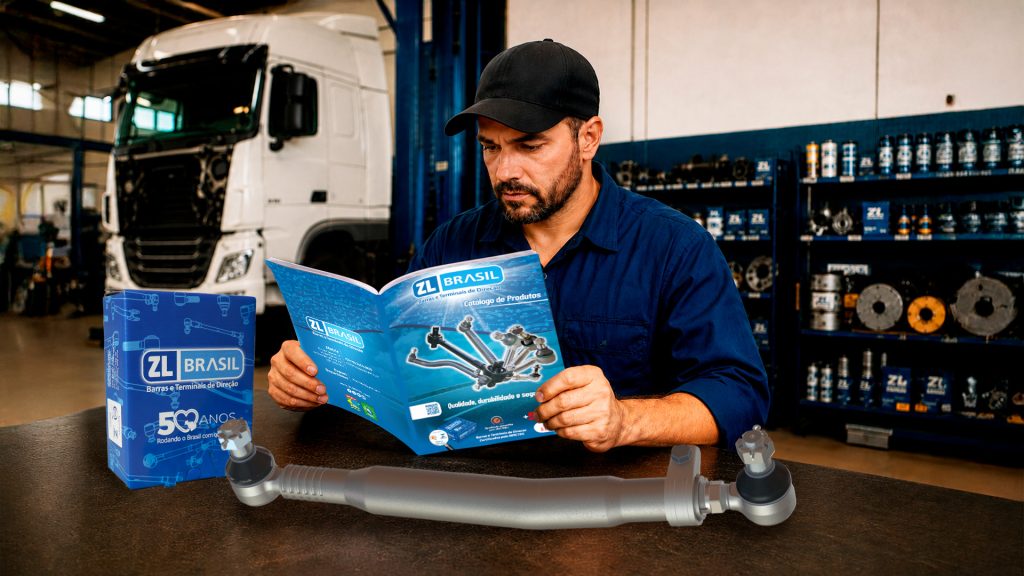
The catalog is one of the main tools for correctly choosing steering rods and tie rod ends. It allows users to search applications by vehicle, compare codes and identify the right part for each need.
For distributors and counter salespeople, catalog consultation reduces dependence on visual comparisons and improves service accuracy. For mechanics, the catalog helps confirm whether the received part matches the application before installation.
The consultation must be carried out with attention to detail. It is important to check whether the indicated code corresponds exactly to the informed vehicle, considering year, version and part position. When in doubt, the recommendation is to confirm the information before completing the purchase or starting the installation.
Compatibility should not be evaluated only by appearance
A common mistake in replacing steering parts is evaluating compatibility only by visual shape. Although two parts may look similar, small dimensional or construction differences may prevent correct installation or compromise system operation.
Among the points that may vary are:
• Part length;
• Thread type;
• Diameter;
• Fittings;
• Application side;
• Working angle;
• Ball stud characteristics.
Therefore, visual comparison should only be used as support, not as the main selection criterion. The priority must always be the technical identification of the application.
Care before Purchase
Before purchasing steering rods and tie rod ends, some precautions help avoid returns, delays and rework. The first is to check all vehicle data with the customer or with the repair shop responsible for the application.
It is also important to verify whether the part is being requested for the correct side, especially when there is a difference between right and left. Another relevant point is to confirm whether the vehicle has undergone previous changes, such as assembly replacement, adaptations or modifications that may interfere with the original application.
In addition, distributors and counter salespeople should guide customers on the importance of installation by a qualified professional. Even the correct part may present problems if it is installed improperly or without the necessary verification procedures.
How the correct choice supports distributors and repair shops
For distributors, indicating the correct part helps reduce exchanges, improve relationships with repair shops and increase confidence in service. When the customer perceives confidence in the recommendation, the buying experience becomes more positive.
For repair shops, the correct choice avoids unnecessary downtime, repeated disassembly and loss of time during service. This also improves the perception of the end consumer, who expects a fast and well-executed solution.
In the aftermarket, application accuracy is an important differentiator. It helps organize the sales process, reduces technical doubts and strengthens the relationship between manufacturers, distributors, counter salespeople and mechanics.
The role of quality in the replacement of steering rods and tie rod ends
In addition to correct application, part quality should also be considered. Steering rods and tie rod ends must offer safety, resistance and compatibility with vehicle requirements.
Therefore, it is important to choose brands that provide clear information, a technical catalog, proper packaging and support for the aftermarket chain. These factors help distributors sell with more confidence and assist mechanics in correct application.
Part selection should not consider price alone. Evaluating origin, warranty, specification and suitability for the vehicle is essential to reduce problems after installation.
Technical choice generates more safety in replacement
Correctly choosing steering rods and tie rod ends for replacement requires more than finding a similar part. The process must consider application, catalog, compatibility and technical verification before purchase.
This care reduces incorrect exchanges, decreases rework and contributes to more accurate service throughout the aftermarket chain. For distributors, it is a way to better support their customers. For mechanics, it is a way to ensure a safer installation aligned with the vehicle.
ZL Brasil offers steering rods and tie rod ends with a focus on quality, correct application and support for the aftermarket. Contact the ZL Brasil sales team and count on a product line developed to serve distributors, counter salespeople and mechanics with greater safety when choosing the right part.