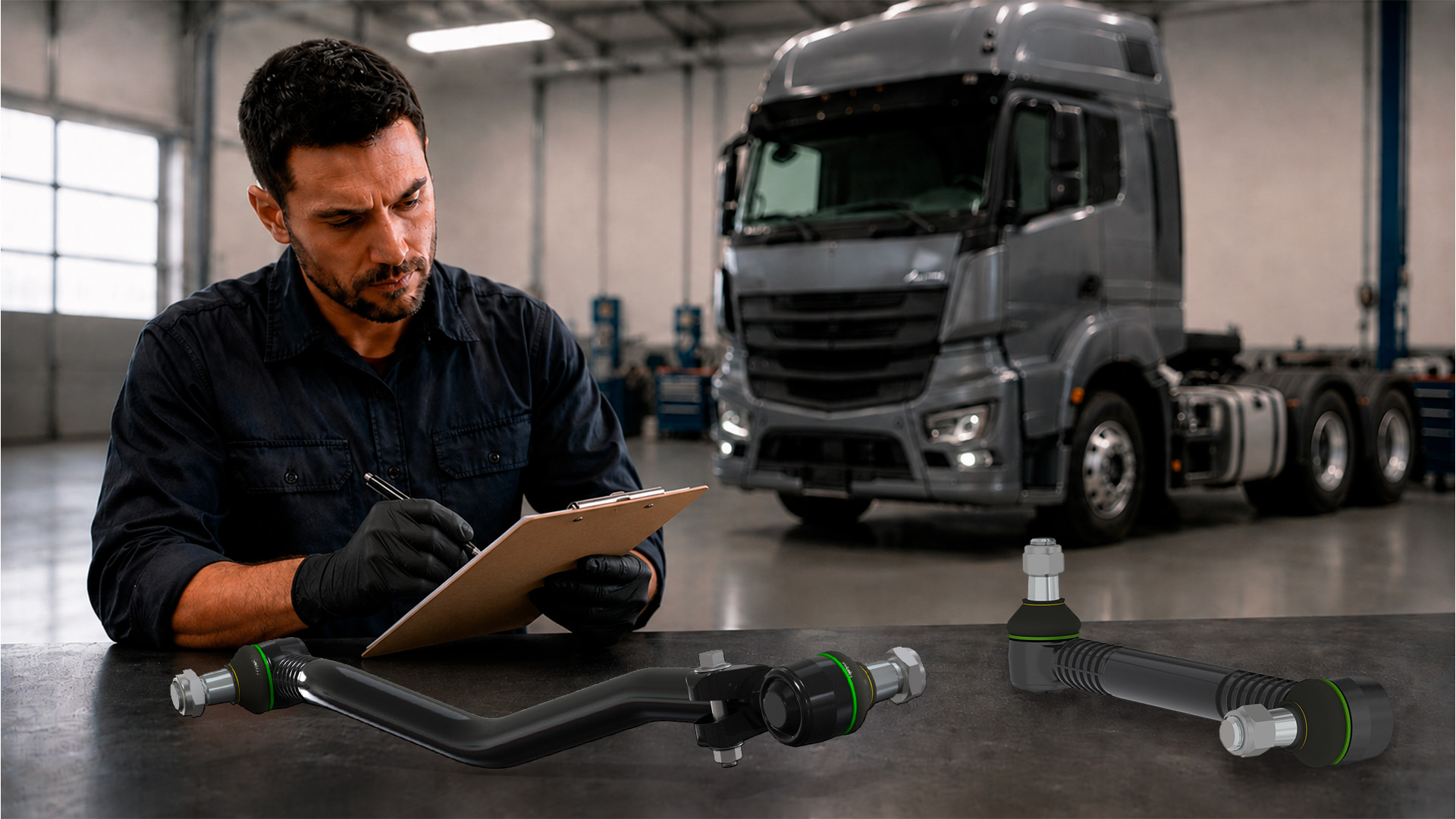
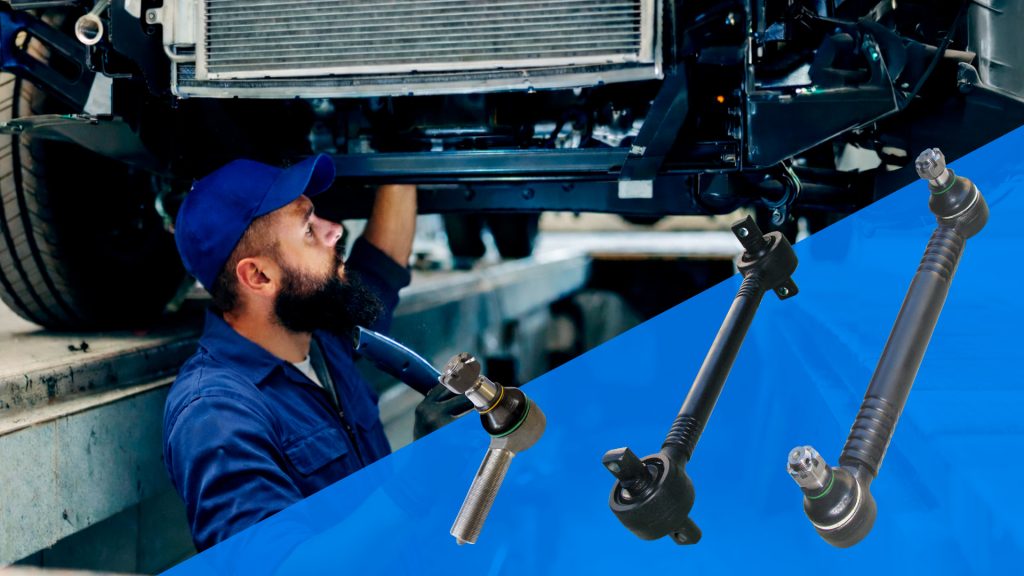
Knowing how to identify the right time to replace steering rods and ends in heavy-duty vehicles is directly related to safety, vehicle stability, and fleet operating costs. In trucks, buses, and other heavy vehicles, these components operate under high loads, constant vibration, road impacts, and long working hours. As a result, wear can develop gradually and, in many cases, without a single clear symptom.
In practice, waiting for failure to become obvious is usually a mistake. Steering components with play, wear, or damage compromise steering response, increase instability, and raise the risk of uneven tire wear and overload on other system parts. In addition, inspection criteria for commercial vehicles consider issues such as play in tie rod or drag link threaded joints, worn, damaged, or missing steering components as significant system failures.
Signs of wear in steering rods and ends
The first point of attention is vehicle behavior. When steering rods and ends begin to lose their optimal working condition, symptoms such as steering play, imprecise corrections, frequent misalignment, and a tendency for the vehicle to pull to one side may appear. These signs indicate that steering geometry and motion transmission may already be affected. Technical maintenance guides for commercial vehicle steering systems identify play, difficulty maintaining trajectory, and instability as typical symptoms of problems in this system.
Another important indication appears during visual inspection. Torn, missing, or improperly positioned boots require immediate attention, as they allow contaminants to enter and accelerate internal wear of the joints. Technical materials from manufacturers clearly recommend replacing the entire end when the boot is torn or missing due to the risk of premature wear. Other signs to observe include oxidation, grease leakage, loose nuts, compromised locking mechanisms, and visible deformations.
In addition, irregular wear on steering axle tires can act as an indirect warning. When steering does not operate precisely, tire contact with the ground becomes improper, accelerating tread wear and reducing vehicle predictability in road or urban use. In heavy-duty operation, this impact becomes even more significant, as small clearances can amplify under load. This relationship between steering wear, drivability, and associated wear on other components is frequently highlighted in technical maintenance guidelines.
Impacts on heavy-duty drivability
In heavy-duty applications, drivability involves more than driver comfort. It includes control, operational safety, and responsiveness in maneuvers, corrective braking, and lane changes. When rods and ends already have play, steering can become “looser,” less precise, and slower in response between driver input and wheel movement.
This scenario worsens in vehicles operating under load, on uneven roads, or in intensive logistics operations. Instead of firm and stable driving, the driver experiences constant corrections, instability, and increased effort to maintain trajectory. This impacts operational fatigue and reduces confidence in vehicle behavior. Regulatory and inspection criteria for commercial vehicles classify play in joints, loose nuts, and worn steering components as unacceptable conditions because they directly affect vehicle control.
Risks of delaying component replacement
Delaying replacement may seem like a way to postpone maintenance costs, but in many cases, the result is the opposite. Advanced wear of steering rods and ends can accelerate problems in tires, suspension, and other steering system elements. This leads to broader corrective maintenance, unplanned downtime, and higher cost per kilometer.
There is also a more critical risk: the progressive loss of operational safety. A component with excessive play, compromised fixation, or advanced wear reduces system reliability and may lead to severe failures during operation. For this reason, commercial vehicle safety inspections classify worn, missing, loose, or compromised steering components as serious violations. Recent inspection reports frequently include failures related to worn or missing steering components.
Inspection criteria to determine replacement timing
The right time for replacement should not be defined solely by mileage. It must consider periodic inspection, vehicle application history, and the actual condition of the component. In heavy-duty vehicles, evaluation should combine visual analysis, play verification, and observation of vehicle behavior in operation.
Some criteria that help guide this decision include:
- noticeable steering play
- torn, missing, or damaged boot
- lubricant leakage or visible contamination in the joint
- compromised nuts, locks, or fixations
- irregular wear on steering axle tires
- noise, vibration, or instability during operation
- evidence of damage, deformation, cracks, or improper repairs
According to manufacturer procedures and safety inspection criteria, checks should be performed with the system unloaded when applicable, without masking the real condition with lubrication before analysis, and with special attention to play, boot integrity, and proper fixation. In other words, inspection must be technical, standardized, and preventive.
Preventive maintenance reduces risk and protects operations
In heavy-duty applications, replacing components at the right time prevents localized wear from becoming a systemic problem. Steering rods and ends should be treated as critical operational components, not secondary maintenance items. When inspection is carried out properly and replacement occurs at the right time, fleets maintain stability, reduce associated wear, and achieve greater reliability in operation.
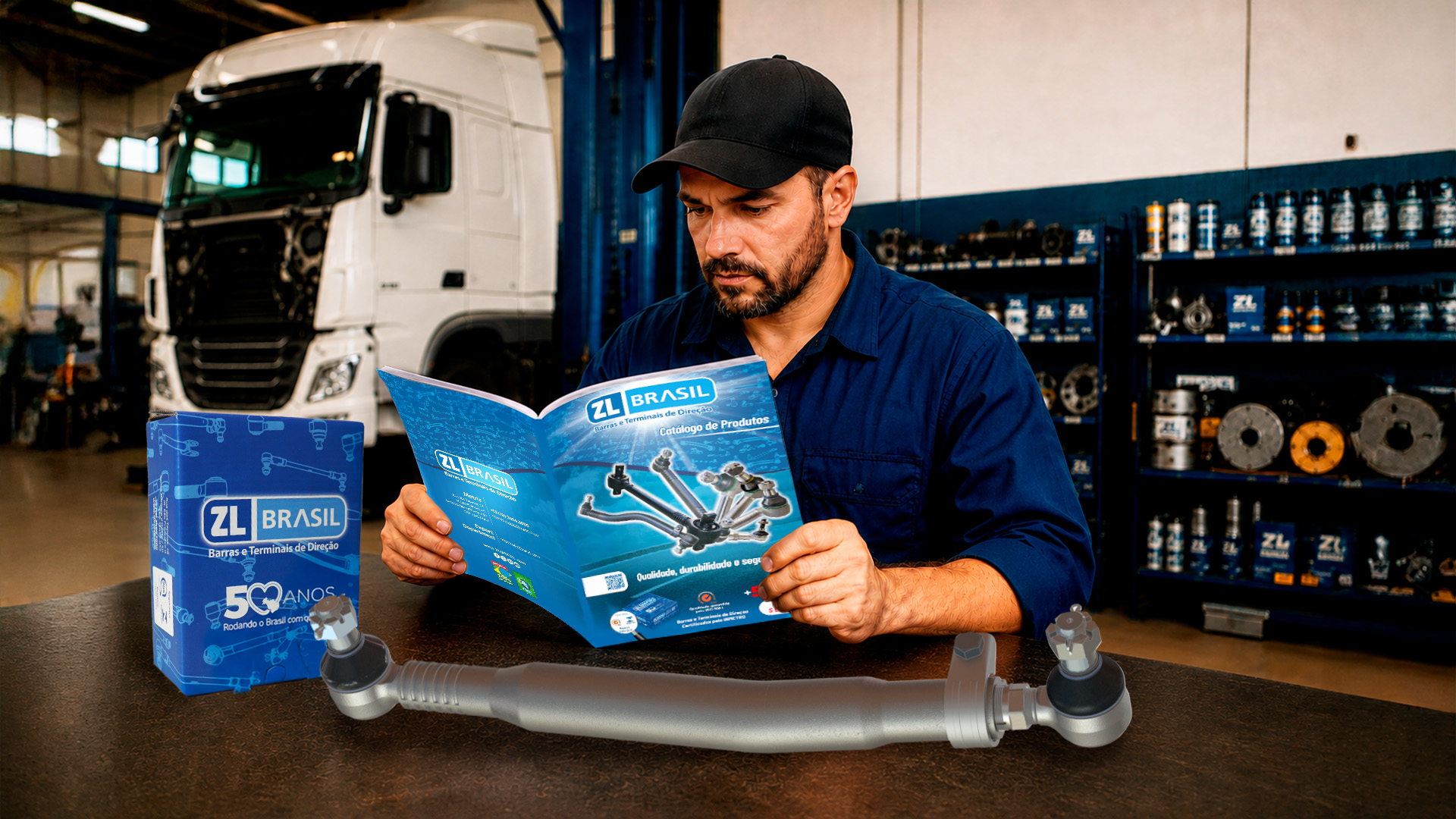
If your operation seeks more safety and reliability in steering maintenance, using components manufactured with dimensional control, adequate strength, and consistent quality standards makes a difference in performance and durability. ZL Brasil develops parts for heavy-duty applications focused on real market use, contributing to safer replacement aligned with operational demands. Get in touch and learn more about our product line.